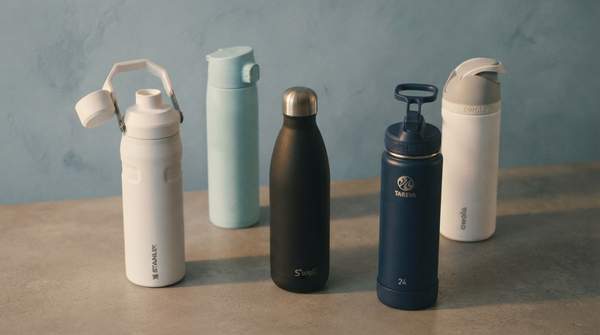
The single most useful fact about choosing an insulated water bottle is that there is no universal winner. GearLab's testing team, which evaluated bottles at the office, the gym, on commutes, and on long hikes, concluded flatly that "there is not one bottle that serves all the purposes." The right choice comes from matching three technical features — the lid system, the capacity, and the body material — to the specific demands of the activity you actually do most. This guide lays out how those features trade off against one another, then maps them to three common scenarios: the office commute, the gym, and the trail.
Lid Systems: Trade-offs in Leak Resistance, Cleaning, and Convenience
If you focus on only one feature, make it the lid. Wirecutter's long-term testing, led by reviewer Kit Dillon, found that insulated metal bottle bodies are "generally exceptionally good" at their core job, and that virtually every meaningful problem beyond surface dents originates with the lid — whether it leaks, and whether it is comfortable to drink from. In their words, "the best bottle has the best lid."
Screw caps are the most secure option. Because they seal the entire opening with a threaded closure, they offer maximum leak protection, and, as Kambukka's buying guide notes, a fully sealed screw top also retains heat better for long hot-beverage use. The trade-off is access: you typically need two hands and a full unscrewing motion to drink.
Chug and spout caps split the difference. GearLab's testers favored one wide-mouth design that screws down like a cap but presents a smaller silicone pinch-cap opening for drinking, calling it their favorite for "basic hydration on the go," including gym sessions and long commutes. Wirecutter's testing of one such brand found the leak-free performance held across every size from 18 to 64 ounces. The compromise is hidden in the seal: the silicone gasket ring that makes these lids reliable can develop mold, as one of their long-term testers discovered "no matter how deeply she cleaned it."
Straw lids optimize for one-handed convenience. Kambukka's guide credits them with easy sipping while driving or working out and decent leak resistance when closed, but flags the costs: more parts to clean, valves and crevices that trap residue, and weaker heat retention than a screw cap. The same pattern appears in GearLab's testing of a twist-open hot-beverage lid, which offers adjustable flow but is "a bit harder to clean."