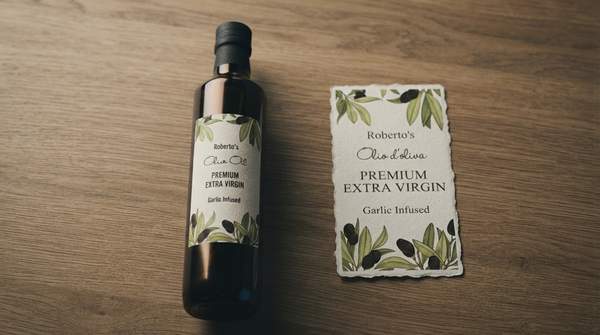
A genuinely high-quality bottle of olive oil announces itself on the label—if you know what to read and in what order. The four checks that matter most are packaging that shields the oil from light and air, a harvest date that tells you how fresh it really is, an origin statement specific enough to trace, and a certification seal from a body that actually tests the oil. Work through them in sequence, and most of the confusing bottles in the aisle eliminate themselves.
Understanding Olive Oil Grades: Beyond "Extra Virgin"
"Extra-virgin" is the highest designation of quality given to olive oil: it is unrefined, free of defects like rancidity, and never treated with heat, as Claire Saffitz explained in her buying guide for Bon Appétit. Those two words, she wrote, are "as close as you're going to get to an overall guarantee of purity you can get off a label." Below it sit virgin oil, which allows some flaws, and refined or "light" oils, which are processed and carry lower levels of polyphenols—the antioxidant compounds that give fresh oil its bitter, peppery edge.
The North American Olive Oil Association cautions that quality exists on a spectrum even within the extra-virgin grade: olive variety, harvest timing, freshness, and handling all shape flavor and aroma, much as they do with coffee, chocolate, or wine. So "extra virgin" is your starting gate, not your finish line. The rest of the label tells you where a particular bottle sits on that spectrum.
Step 2: Dates – The Essence of Freshness
Freshness is where most bottles quietly fail. A best-by date is the weaker signal—most oils retain quality for up to two years from bottling, so a 2024 bottling with a 2027 best-before date, as one certification guide put it, "tells you almost nothing about freshness." A harvest date of October 2025, by contrast, "tells you everything." Look for a harvest date from the most recent autumn.
The reason is chemistry. Polyphenols begin degrading the moment the olive is separated from the tree, and pressing within hours preserves significantly more of these compounds than pressing days later. Fresher oil means better flavor and aroma, and it means more of the antioxidants that survive in the bottle. Once opened, degradation accelerates with exposure to light, heat, and oxygen—another argument for buying bottle sizes you will actually finish quickly.
Step 3: Origin – Tracing Quality to its Source
Origin statements are legally required, but the label can mislead. Companies must state an oil's source, yet that can mean only where the oil was put into bottles—a loophole that lets producers buy defective oil from around the world and present it as Italian. Check the back label for the initials of the true country of origin, and be skeptical of a vague "Product of Italy" on what is actually a blend.
The rule of thumb from Saffitz's guide: you are better off with oil from a single place—ideally one farm or collective, at minimum one country. A named region, estate, or single-harvest claim signals traceability and often adherence to specific regional quality standards, while multi-country blends can hide lower-quality oils. Single-origin does not guarantee excellence, but it removes the easiest way for a mediocre oil to disguise itself.
Step 4: Certifications – Verifying Standards and Authenticity
Certifications are the only check on the label backed by third-party testing rather than the producer's own word. Seals from the California Olive Oil Council (COOC), the International Olive Council, the North American Olive Oil Association, and the New York International Olive Oil Competition all indicate that testing or standards apply. The COOC is among the most demanding: for 100% California-grown oils, it requires free acidity at or below 0.5%, a peroxide value at or below 15 meq O₂/kg, and a UV K270 value at or below 0.22, verified through mandatory annual chemical and sensory testing. Any detectable sensory defect disqualifies an oil from extra-virgin classification.
European geographic designations work differently. PDO (Protected Designation of Origin) and PGI (Protected Geographical Indication) certify that an oil genuinely comes from a named place, with registered names protected against imitation even when terms like "style" or "type" are used alongside them. Producers apply each production year, and certifying bodies test samples for acidity, peroxide value, polyphenol content where required, and sensory characteristics; oils that fail cannot carry the designation for that harvest. But know what the seal does not buy you: it does not guarantee faster pressing, higher polyphenol content, or better packaging. It certifies audited origin, which has real value if regional character is what you want.
Your Olive Oil Quality Checklist
Run these four checks in order on any bottle. Each one either passes, raises a flag, or fails—and the failures compound. A bottle that clears all four is a confident buy; a bottle that fails packaging and dates together should go back on the shelf no matter how handsome its front label.
| Check | What to Look For | Why It Matters | Red Flag |
|---|---|---|---|
| 1. Packaging | Material that protects the oil from light and air | Once opened, oil degrades with exposure to light, heat, and oxygen | Clear container with no light protection |
| 2. Date | A harvest date from the most recent autumn | Polyphenols degrade quickly after harvest; fresher oil tastes better and retains more antioxidants | Only a distant best-by date with no harvest date |
| 3. Origin | A named region, estate, or single country | Traceability and regional standards; blends can hide lower-quality oils | Vague "Product of Italy" on a multi-country blend |
| 4. Certifications | Seals like COOC, PDO, PGI, IOC, or NAOOA | Verified chemical and sensory testing—for example, COOC requires free acidity ≤0.5% and annual testing | No third-party seal and no acidity information |
Two caveats keep the framework honest. First, color is not a quality signal—the belief that darker, greener oil is better is a myth. Second, even a PDO-certified bottle can be old or poorly stored, so the certification check never substitutes for the date check; the seals stack on top of freshness, not in place of it.
Make Your Next Olive Oil Purchase with Confidence
By systematically checking packaging, harvest date, origin, and certifications, you can confidently identify and select high-quality extra virgin olive oil—without needing a ranked list of brands, because the framework lets you evaluate any brand yourself. The measurable indicator of a good bottle is the presence of dark packaging, a clear harvest date, a specific origin, and reputable quality seals on the label. Find all four, and buy; find the harvest date missing and the origin vague, and put it back.
Sources
- High-Quality Olive Oil — Lot22oliveoil.com
- 5 expert tips for buying olive oil — Aboutoliveoil
- How to Avoid Buying Crappy Olive Oil — Bon Appétit
- COOC
- Defining extra virgin standards: what really qualifies — Terra Centuria
- PDO and PGI Certifications: Quick Guide — Big Horn Olive Oil
- What Is PDO and PGI Olive Oil Certification? A Consumer Guide — Four Hour Olive Oil