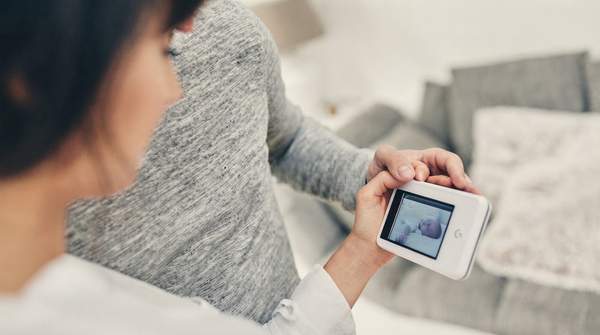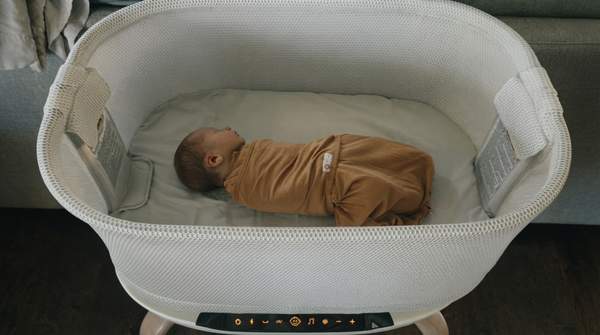
Smart crib mattresses detect an infant's movement, pressure, and sometimes pulse-like signals through sensors embedded in or placed beneath the mattress, then use algorithms to convert those raw measurements into sleep reports and notifications on a parent's phone. The critical catch is regulatory: the FDA has stated that no currently available baby products have been cleared or approved to prevent SIDS or Sudden Unexpected Infant Death (SUID), and that monitors claiming to measure vital signs without marketing authorization have not been evaluated for safety and effectiveness. Understanding both the sensor pipeline and that regulatory boundary is what lets a parent judge a product's claims accurately.
How Smart Crib Mattresses Monitor Infants
The infant monitoring market that emerged over the past decade includes smart cameras, under-mattress sensors, and wearable devices, according to a 2025 study of the real-world use of these technologies published in PMC. An example of the mattress-based approach is the SensoDream infant mattress, an EU-supported prototype described by CORDIS, the European Commission's publication on research projects, as incorporating sensors, a data processing unit, and a smart app that sends parents notifications. The premise is straightforward: parents frequently interrupt their own sleep to check on their infant, and the mattress aims to capture that information continuously instead.
What distinguishes a "smart" mattress from an ordinary one is not the foam or springs but the technology inside. As Shelby Harris, a clinical psychologist and director of sleep health at Sleepopolis, explained in a Saatva guide on smart mattresses, these products use built-in sensors to track movement, heart rate, and breathing during sleep, and connect with apps to deliver sleep reports. The category spans many designs, but the common thread is contactless or near-contactless measurement through the sleep surface itself rather than a device strapped to the baby.
Sensor Technologies and Collected Data
The sensors fall into a few broad families, and each maps to a specific kind of infant data. Pressure and movement sensors embedded in the mattress or placed beneath it register shifts in body position, which products use to estimate sleep duration and restlessness. Because breathing and heartbeat produce tiny rhythmic movements, some designs attempt to derive respiratory or pulse-like patterns from those same pressure signals.
Some smart mattresses go further with arrays of sensors designed to learn an individual's body patterns. A January 2024 news report on WFSB described one health-monitoring mattress with 23 artificial intelligence sensors that monitor pulse, body temperature, and heartbeat. The SensoDream prototype, per CORDIS, similarly aims to track conditions inside the crib environment, including temperature and humidity, alongside infant movement. In marketing terms, "sleep tracking" ultimately means detecting movement and position over time; "vitals monitoring" means attempting to extract breathing or heart-rate signals — and that distinction matters when the regulatory discussion arrives below.
The Smart Mattress Data Pipeline: From Sensor to Insight
Whatever the sensor mix, the information follows the same conceptual journey from the crib to a parent's phone. Industry descriptions converge on a layered model. Bryte, a smart mattress maker, describes its products as combining embedded sensors that detect pressure, movement, and biometrics in real time, with AI algorithms that interpret that data, and a final layer that acts on it. In adult mattresses that final layer may include physical actuators that adjust the surface; in a crib context, it is more typically an app notification or a morning sleep report.
The Smart Mattress Data Journey: From Baby to App
The three-stage model below shows how a physical event — a baby shifting position, breathing — becomes the summary a parent reads at breakfast. Use it to trace any product claim back to the layer that produces it, and to ask what each stage actually measures versus what it infers.
| Stage | What happens | Example output |
|---|---|---|
| Sensor layer (input) | Embedded or under-mattress sensors detect pressure, movement, temperature, and sometimes pulse-like or breathing-related signals in real time. | Raw signal stream: motion events, pressure changes, temperature readings. |
| Data processing layer (interpretation) | Algorithms interpret the signals — counting movements, estimating sleep stages, and flagging readings outside expected patterns. This is inference, not direct clinical measurement. | "Slept 6.5 hours," "2 night wakings," or a triggered alert. |
| User interface layer (output) | A companion app presents sleep reports, notifications, and possibly historical trends to the parent. | Morning sleep report or a real-time phone notification. |
The interpretation stage deserves particular scrutiny. A research study of sensor-enabled infant sleep data published in the journal Sensors described a multi-stage workflow of data acquisition, processing, and behavioral metric derivation — and characterized its analysis as descriptive rather than validated clinical inference. That framing is a useful caution: the pipeline turns physical signals into plausible summaries, but the app's numbers are only as good as the unvalidated interpretation layer that produced them.
Regulatory Landscape: Consumer Product vs. Medical Device
This is where claims and reality most often diverge. A product sold as a consumer sleep accessory faces general product-safety expectations, but a device intended to detect medical conditions falls under FDA medical device rules. The line was drawn clearly in the FDA's 2021 warning letter to Owlet over its Smart Sock: as the intellectual-property law firm Finnegan explained, the FDA determined that the sock's monitoring of vital signs was intended to diagnose desaturation and bradycardia by alerting users that measurements fell outside preset values, which placed it within the definition of a medical device requiring marketing authorization. Owlet subsequently launched a monitor that still tracks heart rate but sends alerts only about sleep quality — illustrating how manufacturers adjust claims to stay on the consumer side of that line.
The FDA's own safety communication, authored by its Center for Devices and Radiological Health, warns that many infant monitors sold over-the-counter for vital sign monitoring do not have FDA marketing authorization, meaning the agency has not evaluated their safety and effectiveness. Consumer Reports, citing neonatologist Joanna Parga-Belinkie of Children's Hospital of Philadelphia, likewise reports that there is neither good research on nor much regulation around the claims device companies can make.
Evaluating Safety Claims and Potential Harms
Three FDA positions should anchor any parent's assessment. First, the agency states it is not aware of any clinical or scientific evidence that currently available baby products prevent or reduce the chance of SIDS, and that any product marketed with such claims has not been cleared or approved for that use. Second, the FDA advises against using unauthorized infant monitors that claim to measure heart or pulse rate, oxygen saturation, breathing rate, or body temperature. Third, infant monitors are not a replacement for adult supervision or safe sleep practices.
Harms extend beyond inaccurate claims. A review of smartphone-integrated infant physiologic monitors in PMC noted that a false low pulse-oximetry alarm could prompt an emergency department visit with blood tests, x-rays, and hospital admission, generating anxiety and a false assumption that an infant is at risk of dying — and concluded there are no medical indications for monitoring healthy infants at home, a position supported by an American Academy of Pediatrics policy statement.
The FDA has also warned that devices using bolsters or wedges to keep babies in a certain sleep position can create suffocation hazards if infants roll or become trapped, a risk that exists regardless of whether the product makes medical claims, as reported by Contemporary Pediatrics. If a monitor's presence adds physical objects to the crib or feeds parental anxiety rather than genuine reassurance, its net value should be weighed carefully.
Informed Choices for Infant Monitoring
Parents should critically evaluate smart crib mattress claims, especially those related to vital signs monitoring or SIDS prevention, by understanding the distinction between consumer products and FDA-reviewed medical devices. The measurable indicator to check is simple: a product's marketing materials either explicitly state FDA clearance or approval for medical indications, or they do not — and absent that statement, treat every health claim as unverified. A mattress that accurately reports sleep patterns may still be a reasonable purchase; a mattress implying it protects your baby's life is making a claim the FDA says no available product has been authorized to make.
Sources
- Do Not Use Unauthorized Infant Devices for Monitoring Vital Signs — U.S. Food and Drug Administration
- Smart Baby Monitors May Be Considered Medical Devices by FDA — Finnegan | IP+ Law Firm
- The quantified baby — PMC
- The world’s first smart mattress for infants — CORDIS | European Commission
- What Is a Smart Mattress, and Is It Worth It? — Sleep Enlightened
- Smart mattress tracks sleep and health patterns — WFSB
- How Do Smart Mattresses Work? Sensors, AI, and Real-time Active Pressure Relief Explained — BRYTE
- MDPI
- Most Babies Don't Need a Wearable Breathing Monitor, Doctors Say - Consumer Reports
- The emerging market of smartphone-integrated infant physiologic monitors - PMC
- FDA alerts clinicians to potential harms from OTC infant monitoring devices — Contemporarypediatrics