Every new "AI gadget" on shelves this holiday season gets its intelligence in one of two ways: it computes answers locally, on the hardware in your hand, or it ships your request to powerful remote servers and waits for a response. Some devices blend both. Understanding which method a gadget uses—and when—explains most of the practical differences you'll notice as an owner, from whether it works when your Wi-Fi drops to what happens to your personal data.
Understanding AI Gadgets: On-Device vs. Cloud Processing
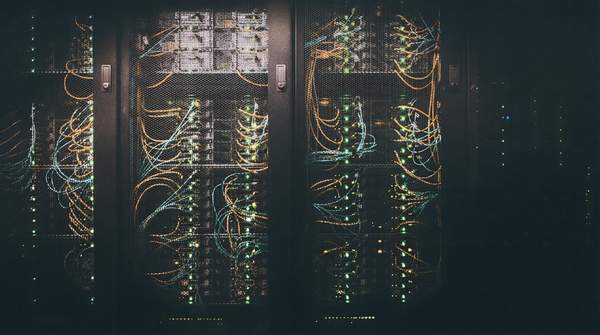
AI devices are hardware systems that include artificial intelligence features, using machine learning, natural language processing, and computer vision to handle tasks automatically or with limited input, according to Lenovo's guide to AI devices. The processing behind those features has to happen somewhere. In an on-device design, the computation runs on the gadget's own processor, so the data never leaves the hardware. In a cloud-based design, the device sends information to remote servers that do the heavy analysis and return a result. Lenovo's guide notes that cloud-based AI systems often use remote servers to process requests, which means many features depend on a working internet connection.
The distinction matters because the two pathways impose opposite constraints. Local processing is bounded by the chip inside the device; cloud processing is bounded by your network. Neither is universally better—the right architecture depends on the task.
On-Device AI: Privacy and Independence
When AI computation happens on the gadget itself, sensitive information stays there. Apple describes this philosophy directly: in many cases its models "run entirely on device so that a task can be completed without data leaving your device." The company points to features like Live Voicemail, where processing "occurs entirely on your device, and isn't shared with Apple," powered by the device's Neural Engine.
The second benefit is independence from connectivity. Because the computation is local, these features don't wait on a network round-trip, and they keep working when internet access is limited or unavailable—precisely the situation where, as Lenovo's guide observes, cloud-dependent functions "can become unavailable or operate with fewer capabilities."
The trade-off is capacity. A gadget's processor and storage are finite, so on-device models are typically smaller and less capable than what a data center can run. Apple's own support documentation acknowledges this boundary: "for more complex requests that require more computational capacity," its systems turn to the cloud.