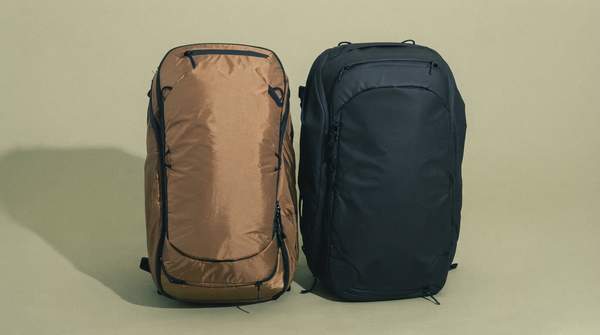
The best carry-on travel backpack is not the one with the most features—it is the one whose design philosophy matches how you actually travel. Gear reviewers converge on a shared principle: the perfect pack strikes a balance between functionality and simplicity, between durability and weight, between capacity and carry-on compliance, and smart design wins over feature overload. Before comparing brands, narrow your search to one of three archetypes—the crossover commuter, the expandable system, or the adventure-ready hauler—then evaluate opening style, harness comfort, and organization within that category.
Understanding Travel Backpack Archetypes
Travel backpacks cluster into recognizable design philosophies, and each embodies a different answer to the same question: what should a bag optimize for? A bag built to shuttle between office and airport prioritizes tech organization and a slim profile. A bag built for flexible trip lengths prioritizes adjustable volume. A bag built for rugged journeys prioritizes durability and raw capacity. Indie Traveller's buyer guide frames the ideal as a 35–45 liter pack that is not too heavy, streamlined without useless pockets, and built from materials that last—while warning that bags boasting "a zillion and a half different features" often look better in marketing videos than they perform in real life. Capacity itself signals use: a roughly 30-liter model suits urban travelers and weekend trips, a 40-liter model serves as a main carry-on, and larger sizes target gear-heavy or outdoor users.
Travel Backpack Archetype Comparison
Use this table to locate your travel style before browsing specific models. Each row pairs a design philosophy with its organizational approach, capacity range, and a well-regarded example that illustrates the archetype's strengths and trade-offs.
| Archetype | Primary Use Case | Key Organizational Features | Capacity & Compliance Focus | Example Model |
|---|---|---|---|---|
| Crossover Commuter/Travel | Daily commute and short weekend trips, blending urban functionality with travel readiness | Smart pocket layouts, spacious laptop sleeve, well-padded back panel and straps; organization geared toward tech and daily essentials | Typically around 30–35L; carry-on friendly, with dimensions at or under common U.S. carry-on maximums | Aer Travel Pack 4 |
| Expandable System | Travelers needing flexible capacity, adapting from daily carry to short trips | Multiple compartments and wide-access openings; expansion mechanisms vary in practical utility between models | Adjustable volume (e.g., 20L expanding to 30L); compressed size aids compliance, but expanded dimensions may challenge strict limits | Nomatic Travel Pack |
| Adventure-Ready Hauler | Longer journeys and adventure trips where reliability outweighs gadgetry | Fewer built-in pockets; internal organization can be added with packing cubes; larger versions add a detachable daypack with laptop sleeve | Around 40L complies with most airline carry-on restrictions; 55L and 70L versions exceed or strain carry-on limits | Osprey Farpoint 40 |
The comparison reveals the central trade-off: as capacity and ruggedness rise, built-in organization tends to fall, and carry-on compliance becomes harder to guarantee. No archetype escapes this tension—you choose which side of it you want to live on.
Crossover Commuter/Travel Backpacks
The crossover archetype is optimized for versatility between city life and short-term travel. GearLab's review of the Aer Travel Pack 4—its pick for the best crossover for travel and daily use—praises its smart pocket layout, spacious laptop sleeve, robust exterior, and well-padded back panel and straps, noting that all its dimensions sit at or under the common U.S. carry-on maximum so it should fit comfortably overhead. The details matter in transit: a simplified front tech pocket spares you rummaging for a charging cord, and a top pocket sized for a passport and headphones saves you from rifling through your bag under a customs agent's stare. The trade-off is capacity—smaller volume options mean this archetype suits extended weekends rather than multi-week hauls—and the hip belt must be purchased separately.
Expandable System Travel Backpacks
The expandable system's primary benefit is the ability to adjust volume based on packing needs. Aaron Radcliffe of Nomads Nation describes the Nomatic Travel Pack as beginning as a slim 20-liter bag for commuting, then expanding to 30 liters for one-bag travel—a design he calls both versatile and practical for different trip types, with RFID-safe slots, mesh pouches, and small-gear space in the front compartment. But expansion is the most variable feature in the category. Wirecutter's Kit Dillon is blunt that most bags' expanding mechanisms "aren't worth the extra zipper they're built on," while praising the Peak Design Travel Backpack 45L as the exception that looks as good fully packed at 45 liters as compressed to a 30-liter daypack. The lesson: judge an expandable bag by its compressed and expanded states separately, because expanded dimensions may challenge strict carry-on limits.
Adventure-Ready Hauler Backpacks
The hauler archetype trades clever pockets for dependability. Indie Traveller notes that the Osprey Farpoint 40 doesn't have as many pockets or features as fancier one-bag air travel backpacks, but it is a reliable choice for adventure trips, and packing cubes can add internal organization if you want it. Its 40-liter volume complies with most airline carry-on restrictions; the 55-liter version can work as a carry-on if you detach its included 15-liter daypack and carry that as your personal item, while the 70-liter is best checked as it far exceeds the carry-on limit. Db's travel-first guide adds that features like multiple compartments, easy access points, and reinforced straps keep gear organized and loads balanced, and that convertible or hybrid packs are worth considering if you move between trails, campsites, and vehicles.
Key Features to Evaluate for Your Travel Backpack
Once you have chosen an archetype, evaluate any candidate bag against the criteria professional testers actually weight. GearLab scores travel backpacks on four metrics—organization and protection, carry comfort, and travel access and livability at 30 percent each, with versatility at 10 percent—meaning how easily you reach and protect your contents matters as much as how the bag feels. Wirecutter's standard is almost domestic: opening your carry-on should feel like opening a well-organized closet, with everything in the right place and easy to reach. Assess the laptop sleeve for genuine padding and depth, count only the pockets you will use habitually, and favor quick-access openings for documents and cords. Durability shows up in fabric and zippers—GearLab's reasons to buy on the Aer include "incredibly tough fabric"—and simplicity is a feature, not a deficiency.
Prioritizing Carry Comfort: Harness Systems and Straps
Comfort becomes decisive exactly when a bag is packed to capacity, which is precisely when you will be carrying it. Look for a well-padded back panel, cushioned shoulder straps, and reinforced straps that keep the load balanced; a hip belt matters most for heavier loads, and it is worth confirming whether one is included or sold separately, as with the Aer Travel Pack 4. North Sails' sizing guide emphasizes that a travel pack must remain comfortable for hours, adapting to changing transit environments. Comfort assessment is ultimately subjective, but it generally rests on adequate padding, reinforced straps, and load-balancing features—so test any bag with weight in it, not empty on a showroom floor.
Making Your Final Backpack Decision
Select a carry-on travel backpack that balances your preferred archetype's characteristics with essential features like opening style, harness comfort, and organizational needs. This guide covers one-bag travel for extended weekends to several weeks, not long-term backpacking or specialized hiking, and it deliberately avoids ranking every model or tracking prices, which change. Because airline carry-on dimensions vary and shift, verify your specific carrier's limits before you buy. The measurable indicator of a good choice is simple: the chosen backpack successfully accommodates your typical packing volume, fits airline carry-on requirements, and remains comfortable during extended wear. If a candidate bag passes all three tests on your longest typical trip, it is the right bag—whatever its marketing says.
Sources
- Best Travel Backpacks — GearLab
- Best Travel Backpacks 2026 Buyer's Guide (Tips + Top Picks) — Indie Traveller
- Travel Backpack Manufacturing Guide: Capacity, Compartments, Materials and OEM Details — China Hiking Bag & Accessories Supplier-Quanzhou Shunwei Bag Co., Ltd.
- Aer Travel Pack 4 Review — GearLab
- 7 Best Carry On Backpacks [One Bag Travel Packs!] - Nomads Nation
- The Best Carry-On Travel Backpacks — Wirecutter: Reviews for the Real World
- How to Choose the Right Backpack – A Travel‑First Guide. — Db
- How to Choose a Backpack: Size & Dimensions — North Sails