The right sharpener for your kitchen is less a matter of prestige than of honest self-assessment: how much are your knives worth, how much technique are you willing to learn, and do you prize tonight's convenience or a decade of blade life? Pull-through sharpeners and electric machines trade metal for speed, whetstones trade time for precision, and honing rods do something altogether different—they maintain an edge rather than create one. This guide compares all four and walks you through the questions that lead to a confident choice.
Understanding Sharpening vs. Honing: The Foundation of Knife Care
Before choosing a tool, it helps to know which job the tool actually performs. Sharpening, as the restaurant-supply guide at WebstaurantStore defines it, is the process of making a dull blade sharp—grinding away metal to produce a new edge. Honing is the process of maintaining a blade that is already sharp, and regular honing keeps a knife in working order between sharpening sessions.
Consumer Reports, whose advice on sharpeners is written by Amanda Lecky, frames the same distinction in terms of rhythm: most home cooks need to sharpen only two or three times a year, while a honing rod used every few cooking sessions realigns the edge and stretches out the intervals between sharpenings. A Wusthof regional business manager quoted in the same article calls honing "the single most important thing you can do for the longevity of your knife." The practical takeaway: sharpening and honing are complementary rituals, not competing ones, and most well-kept kitchens eventually hold one tool for each.
Types of Knife Sharpeners: A Comparative Overview
Pull-through sharpeners are the most popular route, and the reason is plain: they are quicker than whetstones and more precise than sharpening steels, as Nikkitha Bakshani explains in a Borough Kitchen guide. The trade-off is that they shed the most metal of any home method, which weakens a knife's long-term durability. A typical unit has a handle on one side and one to three abrasive grooves on the other; you brace it on the counter and pull the blade through each stage in turn.
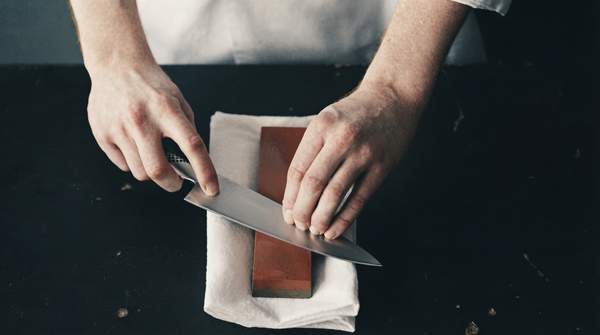
Electric sharpeners replace elbow grease with motorized abrasive discs, wheels, or belts, and many offer two or three levels of abrasion—a coarse stage to create a new edge and finer stages to refine it. Whetstones remain the traditional method, coming in many styles and degrees of coarseness, and they are where chefs and knife aficionados gravitate, as Bakshani observes, because they are most finely attuned to how a blade actually cuts. Honing rods, finally, are the maintenance instruments: steel is harder and less forgiving than stone, so a rod sheds more metal than a whetstone but far less than a pull-through.